
Introduction
Moving to Dubai is exciting, but relocating a pet requires more planning than simply booking a flight. If you want to relocate your dog or cat to Dubai, you need to coordinate veterinary preparation, identification, vaccinations, health documentation, the UAE import permit, airline requirements, and arrival procedures.
The UAE has specific rules for importing cats and dogs from other countries. Requirements can also differ depending on the rabies-risk classification of the exporting country. For example, animals arriving from high-risk rabies countries may need a rabies antibody titration test, while additional requirements apply to vaccination and parasite treatments.
This guide explains the process in practical terms so you can plan your pet’s move with fewer surprises.
What You Need to Relocate Your Dog or Cat to Dubai
The UAE requires an import permit before an imported dog or cat enters the country. The current Ministry of Climate Change and Environment, commonly referred to as MOCCAE, service information states that the permit is valid for 90 days from its issuance date. The import process involves submitting an electronic application, paying the applicable fee, and receiving the permit electronically.
Your pet must also meet the country’s veterinary conditions. These generally include permanent identification through a microchip, valid vaccinations, an official veterinary health certificate, and parasite treatment documentation.
The exact requirements depend partly on where your pet is traveling from. Therefore, do not rely on an old checklist prepared for another country. Confirm the current requirements for your exporting country before arranging the final veterinary appointment.


Check Whether Your Pet Meets UAE Entry Requirements
Before booking your flight, verify your dog’s or cat’s eligibility for entry.
The UAE distinguishes between countries according to their rabies-risk status. MOCCAE requirements state that pets from low-risk countries must meet a minimum age requirement of 12 weeks, while pets from high-risk countries must generally be at least 15 weeks old.
This age requirement matters because rabies vaccination itself cannot simply be completed immediately before travel. The vaccination must be administered according to the applicable veterinary requirements.
If you are planning to relocate your dog or cat to Dubai from a country classified as high risk for rabies, allow considerably more time for preparation. A rabies antibody test may also be required.
Check Breed Restrictions for Dogs
Dog owners should also check whether their breed is subject to UAE import restrictions before making travel arrangements.
MOCCAE’s published pet-import guidance identifies restrictions involving several categories of fighting or hybrid dogs, including Pit Bull types, Japanese Tosa, Dogo Argentino, Fila Brasileiro, wolf-dog hybrids, and American Staffordshire Terrier.
Because breed identification and applicable regulations can be important at the border, owners should verify the current rule with the UAE authority before purchasing a non-refundable ticket.
Get Your Pet Microchipped
A compatible microchip is an essential part of the relocation process.
Your dog’s or cat’s microchip number should correspond with the identification details recorded in the vaccination documents and health certificate. MOCCAE documentation specifically includes the animal’s microchip identification as part of the import paperwork.
If your pet already has a microchip, ask your veterinarian to scan it and confirm that the number matches your existing records.
Do this well before departure. Discovering a mismatch between the microchip and paperwork shortly before a flight can create unnecessary delays.
Complete the Required Vaccinations
Vaccinations are one of the most important parts of preparing to relocate your dog or cat to Dubai.
For dogs, UAE requirements include rabies vaccination along with vaccinations covering canine distemper, canine parvovirus, infectious canine hepatitis, and leptospirosis. MOCCAE notes that leptospirosis vaccination may be replaced by testing where the exporting country does not routinely vaccinate for it.
For cats, the required vaccination coverage includes rabies, feline panleukopenia, feline rhinotracheitis, and feline calicivirus.
Your veterinarian should record the vaccination dates, vaccine information, and other identifying details in the animal’s vaccination card or pet passport.
Do not wait until the week before departure to investigate these requirements. Some vaccination and testing steps have waiting periods, especially when a rabies antibody test is involved.
Understand the Rabies Titer Requirement
The rabies antibody titration test is particularly important when you relocate your dog or cat to Dubai from a high-risk rabies country.
MOCCAE documentation describes a rabies serum neutralization test with a minimum antibody level of 0.5 IU/ml or higher. The published guidance also identifies countries for which this test is not required under the listed conditions.
The test should be handled through an appropriate veterinary laboratory, and your veterinarian should ensure the documentation matches the animal’s microchip and vaccination records.
Because rabies testing can add significant time to the relocation process, start early. Waiting until your flight is approaching can leave insufficient time if the result, paperwork, or vaccination history does not meet the applicable requirements.
Arrange the Veterinary Health Certificate
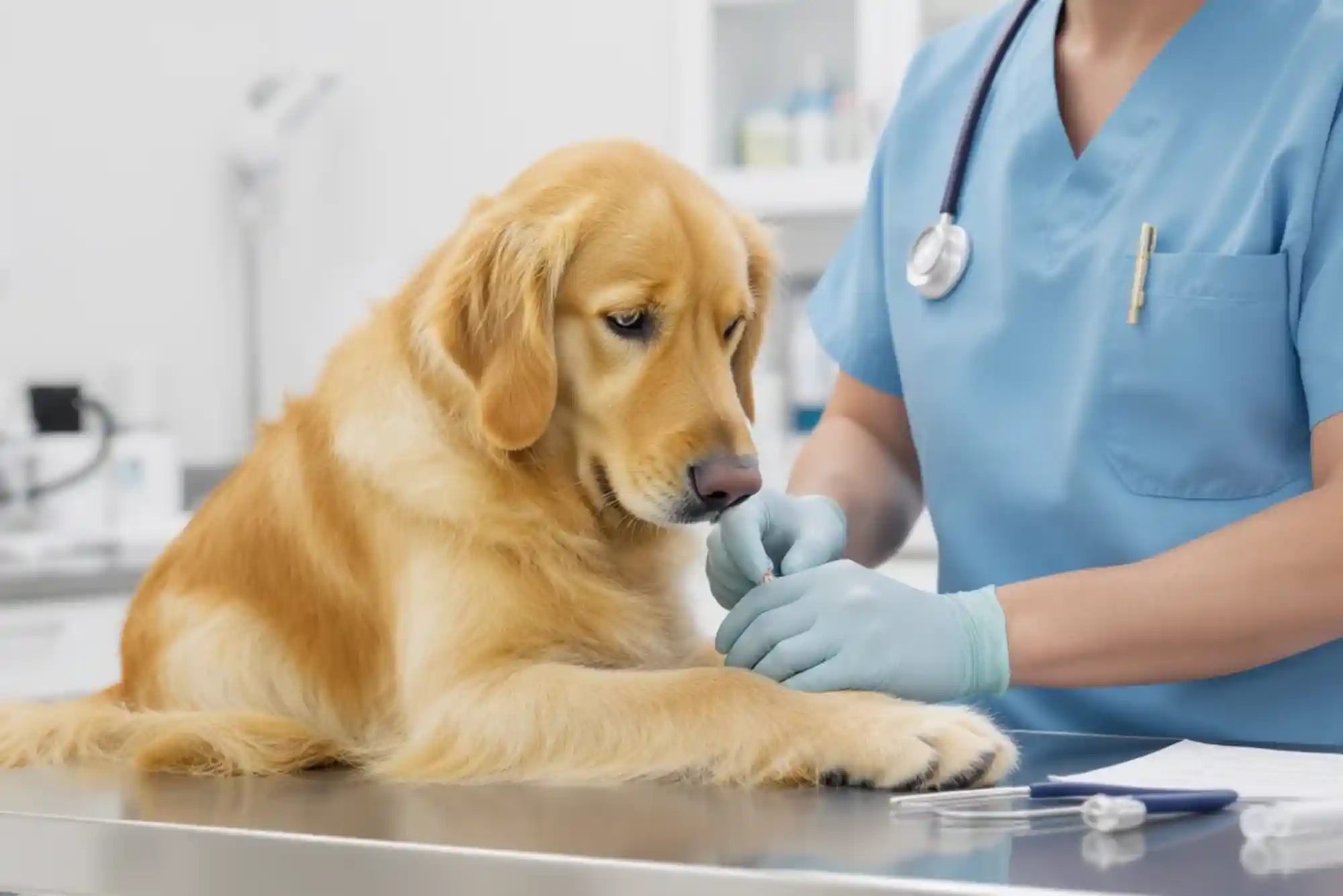
A veterinary health certificate is another core document when you relocate your dog or cat to Dubai.
The certificate must demonstrate that the animal has been examined and is in satisfactory health for travel. MOCCAE’s requirements specify an official health certificate from the exporting country and identification of the pet through its microchip.
Your veterinarian should prepare the certificate according to the UAE’s current requirements rather than using a generic international travel form without checking its suitability.
Keep the original documents with you during the journey. Digital copies are useful for backup, but they should not be treated as a replacement for documents required at the point of entry.
Complete Parasite Treatment
Parasite treatment is another requirement that is easy to overlook.
MOCCAE states that dogs and cats must receive preventive treatment for internal and external parasites within the 14 days before shipment, with the treatment recorded in the health certificate or animal passport.
Your veterinarian should record the treatment clearly, including the relevant date and medication details where required.
Timing matters here. If treatment is completed too early, it may fall outside the required period by the time your pet travels. Ask your veterinarian to plan the treatment around the actual departure date.
Apply for the UAE Pet Import Permit
Once your pet’s documentation and veterinary preparation are underway, you can arrange the UAE import permit.
The MOCCAE service is completed electronically. The published service information states that the permit application involves completing the electronic form, making payment, and receiving the permit electronically. The estimated processing time is one working day for ordinary pet imports, although special categories such as service, emotional-support, or medical dogs can require longer processing.
The current published federal fee for issuing an import permit is AED 200 per animal. Additional fees apply when the animal is released after inspection at the entry point. MOCCAE lists AED 500 for the release of one dog and AED 250 for the release of one cat.
Do not confuse the import permit with airline approval. They are separate requirements.
Book the Pet’s Flight Correctly
After the government requirements are addressed, confirm how your airline will transport your pet.
Airline rules can vary significantly. Emirates, for example, states that travelers flying with pets should submit its pet-travel form at least one week before the scheduled departure. It also notes that pets may need to travel as cargo when the carrier’s combined dimensions exceed the airline’s specified limit.
The airline may have separate requirements for the crate, routing, breed, animal size, temperature restrictions, and travel arrangements.
For this reason, relocate your dog or cat to Dubai only after confirming both sides of the process: UAE government entry requirements and the airline’s transportation rules.
Prepare the Travel Crate
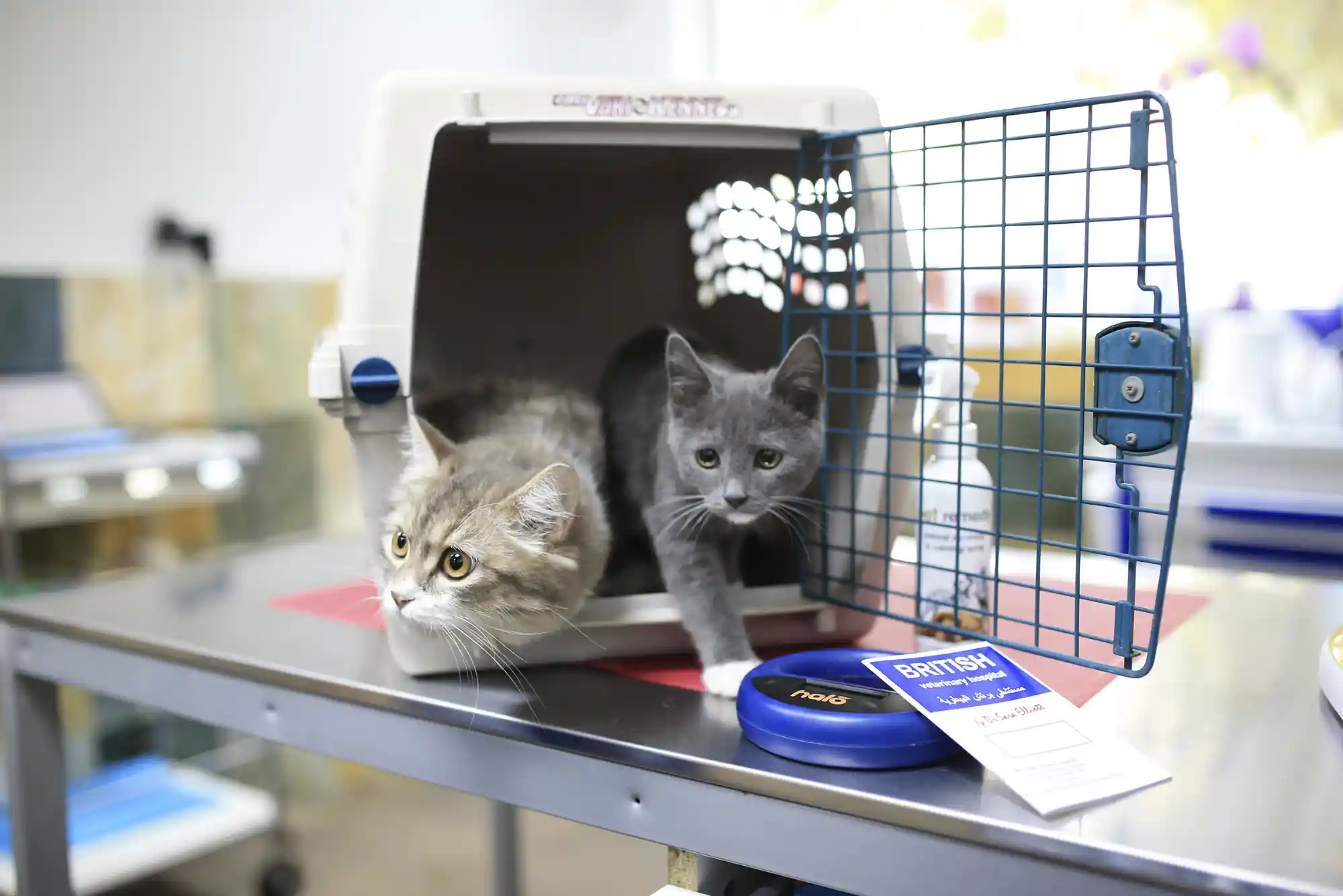
A safe, airline-compliant crate is essential for air travel.
The crate should allow your pet to stand, turn around, and lie down comfortably. It should also provide appropriate ventilation and secure construction.
Introduce the crate gradually before the journey. A pet that already associates the crate with calm experiences may handle the airport and flight more comfortably than an animal encountering it for the first time on departure day.
Avoid making major changes to your pet’s routine immediately before travel. Feed according to your veterinarian’s and airline’s instructions, and provide access to water as appropriate.
Medication or sedation should not be used casually for air travel. Discuss any travel-related medication with your veterinarian before the journey.
Arrive at the UAE Entry Point
When your pet arrives in the UAE, the animal and documentation may be inspected before release.
MOCCAE’s current service description states that arriving animals are examined at the entry port to verify compliance with the import permit and applicable technical requirements. The service includes an electronic request for release followed by inspection.
Dubai Airport Cargo Village is among the listed veterinary quarantine service locations.
Keep your pet’s original vaccination records, health certificate, import permit, rabies documentation where applicable, and identification details easily accessible.
A missing document can turn a straightforward arrival into a stressful situation.
How Long Does It Take to Relocate Your Dog or Cat to Dubai?
The timeline depends heavily on your country of departure and your pet’s existing vaccination status.
If your pet already has a valid microchip, current vaccinations, and all required documentation, preparation can be relatively straightforward.
However, relocating your dog or cat to Dubai from a high-risk rabies country can take longer because rabies vaccination and antibody testing may need to be completed before travel.
Start planning several weeks or months before your intended move rather than treating pet relocation as a last-minute travel task. Your veterinarian and the UAE import authority can confirm the exact timeline applicable to your situation.
Common Mistakes to Avoid When Relocating a Pet to Dubai
One of the most common mistakes is assuming that a vaccination certificate automatically satisfies UAE entry requirements. The documentation must correspond with the pet’s identification and applicable rules.
Another mistake is booking a flight before checking the airline’s pet policy. Government approval does not automatically guarantee that an airline will accept the animal on your preferred itinerary.
Owners also sometimes underestimate the importance of the rabies-risk classification of their country. If a rabies antibody test is required, it can affect the entire schedule.
Finally, avoid relying on outdated online checklists. UAE pet-import procedures and fees can change, so check the official MOCCAE requirements shortly before travel.
Plan Your Pet’s Dubai Move Early
To relocate your dog or cat to Dubai successfully, treat the move as a veterinary and immigration process rather than an ordinary flight booking. Your pet may need a microchip, specific vaccinations, parasite treatment, a health certificate, rabies testing depending on the country of origin, a UAE import permit, and airline approval.
The safest approach is to begin early and verify the requirements against your pet’s exact country of departure. MOCCAE requirements are the key reference for UAE entry, while your airline provides the separate transportation rules.
FAQs
Do I need an import permit to bring my dog or cat to Dubai?
Yes. An import permit is required for bringing cats and dogs into the UAE. MOCCAE’s current service provides electronic application and permit issuance, with the permit stated as valid for 90 days from issuance.
How much does a UAE pet import permit cost?
MOCCAE’s current published federal fee is AED 200 for an import permit for one animal. Separate release and inspection-related fees apply when the pet arrives.
Does my pet need a rabies vaccination to enter Dubai?
Yes. Rabies vaccination is part of the required vaccination program for both dogs and cats. The animal must meet the applicable age and vaccination conditions.
Does my pet need a rabies titer test for Dubai?
It depends on the country from which the pet is being imported. MOCCAE requirements provide additional rabies antibody testing requirements for animals coming from high-risk countries, while certain listed countries are exempt under the applicable conditions.
Can I bring my pet on an Emirates flight to Dubai?
Emirates has specific requirements for transporting pets. Its current guidance asks travelers to submit a pet-travel form at least one week before departure, and certain carrier sizes or itineraries may require cargo transportation.
What documents should I keep with my pet during travel?
Keep the import permit, vaccination records or pet passport, official veterinary health certificate, microchip information, and any required rabies antibody test documentation together. Your airline may also request additional paperwork.