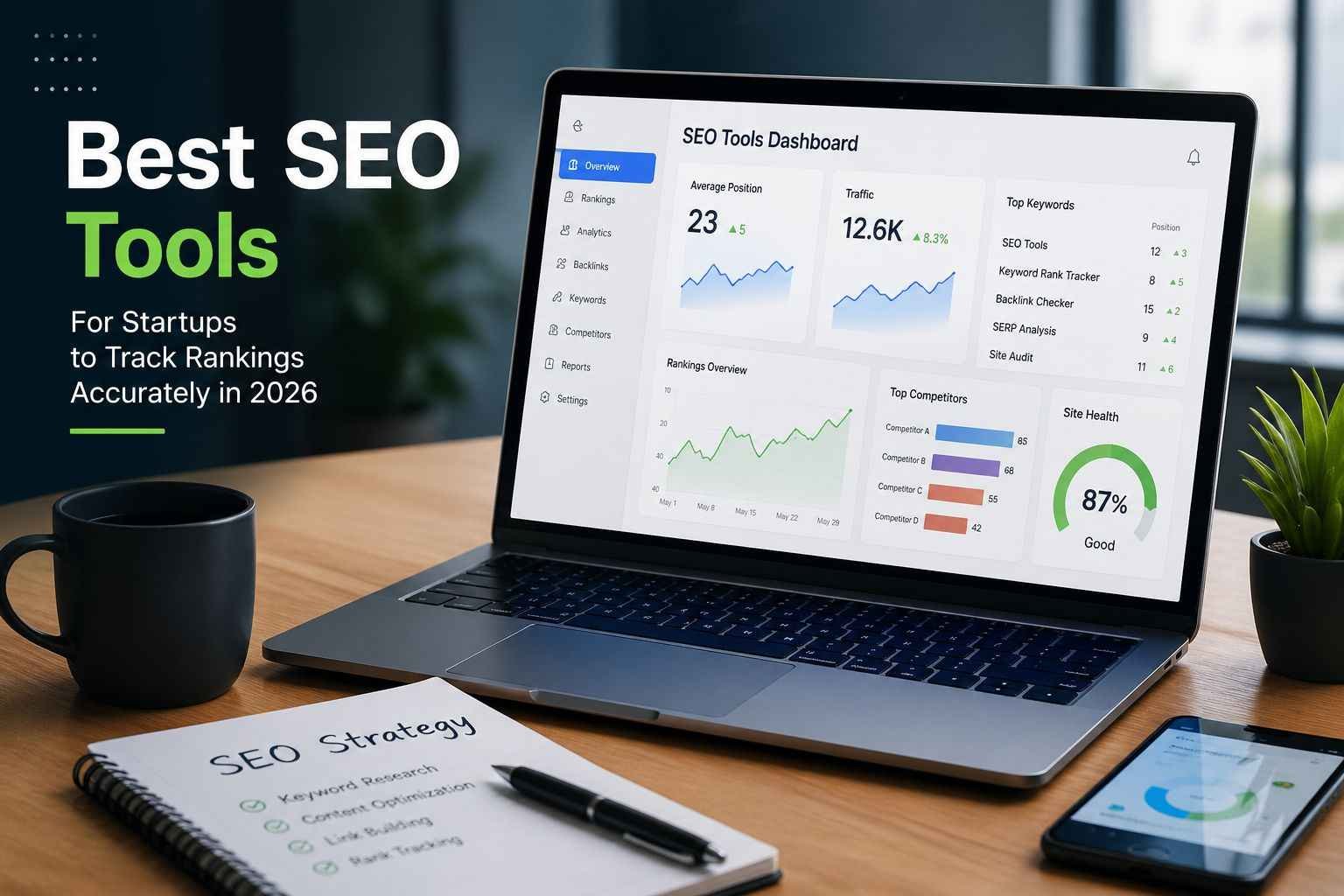
Search visibility has become one of the most valuable growth assets for startups. In a landscape where competition evolves rapidly, relying on guesswork is no longer an option. Accurate rank tracking, keyword insights, and performance analytics are now essential for any business aiming to scale organically.
The challenge, however, is not access to tools—but choosing the right ones. With dozens of platforms offering overlapping features, startups often struggle to find tools that balance affordability, accuracy, and usability.
This guide breaks down the best SEO tools for startups in 2026, focusing specifically on ranking accuracy, practical usability, and long-term growth value.
Why Accurate Rank Tracking Matters More Than Ever
Ranking positions are no longer static. Search engines personalize results based on location, intent, and user behavior. For startups, this means a keyword ranking on page one in one region might appear differently elsewhere.
Reliable SEO tools help remove this uncertainty by offering location-based tracking, competitor insights, and real-time fluctuations. Without these insights, even strong content strategies can miss their full potential.
Core Features Startups Should Prioritize
Before selecting any tool, it’s important to understand what truly matters. Not every feature is necessary in the early stages, but a few capabilities are non-negotiable.


- Accurate daily or real-time rank tracking across locations
- Keyword difficulty and search intent analysis
- Competitor tracking and gap identification
- Technical SEO auditing capabilities
- User-friendly dashboard for quick decision-making
Tools that combine these features tend to offer the best value, especially when budgets are limited.
Top SEO Tools Startups Are Using in 2026
The SEO ecosystem continues to evolve, but a few tools consistently stand out for startups due to their balance of pricing, performance, and scalability.
1. SEMrush
SEMrush remains one of the most comprehensive platforms available. It offers rank tracking, competitor research, backlink analysis, and content optimization tools in a single interface.
Its strength lies in competitor intelligence. Startups can identify what competitors are ranking for and replicate winning strategies more efficiently.
2. Ahrefs
Ahrefs is widely known for its backlink analysis, but its rank tracking and keyword research tools are equally powerful. The platform provides detailed insights into keyword movements and SERP volatility.
For startups focusing on content-driven growth, Ahrefs offers unmatched clarity in understanding what works and why.
3. Google Search Console
Despite being free, Google Search Console remains one of the most valuable tools for startups. It provides direct data from Google, including impressions, clicks, and keyword positions.
While it lacks advanced competitor features, it is essential for validating performance and identifying technical issues.
4. SE Ranking
SE Ranking has gained popularity among startups due to its affordability and clean interface. It offers accurate rank tracking, website audits, and competitor monitoring without overwhelming users.
This tool is particularly useful for small teams managing SEO without dedicated specialists.
5. Ubersuggest
Ubersuggest provides a simplified approach to SEO. It is ideal for startups that need quick insights without complex dashboards.
While not as advanced as premium tools, it covers keyword research, rank tracking, and site audits effectively.
Comparing Tools Based on Startup Needs
| Tool | Best For | Key Strength | Pricing Level |
|---|---|---|---|
| SEMrush | Scaling startups | All-in-one SEO suite | High |
| Ahrefs | Content-driven growth | Backlink & keyword insights | High |
| SE Ranking | Small teams | Affordable tracking | Medium |
| Ubersuggest | Beginners | Simple interface | Low |
| Search Console | All startups | Direct Google data | Free |
Understanding the Cost of SEO Tools
SEO tools vary significantly in pricing depending on features and scale. For startups, the goal should not be to choose the cheapest option—but the most efficient one.
Basic tools may start from $0 to $50 per month, while advanced platforms can exceed $200 monthly. The real value comes from how effectively the tool translates data into actionable insights.
In many cases, startups combine free tools with one premium platform to balance cost and performance.
How Startups Actually Use These Tools
Tools alone do not guarantee results. Their effectiveness depends on how they are integrated into daily workflows.
A typical startup SEO workflow includes tracking core keywords, analyzing weekly performance, identifying content gaps, and optimizing pages accordingly.
- Track 20–50 primary keywords weekly
- Monitor competitor ranking changes
- Identify underperforming pages
- Update content based on keyword gaps
- Measure improvements through ranking shifts
This structured approach ensures that SEO becomes a growth system rather than a one-time effort.
Common Mistakes Startups Should Avoid
Many startups invest in tools but fail to extract real value due to common strategic mistakes.
- Tracking too many irrelevant keywords
- Ignoring local SEO variations
- Focusing only on rankings, not conversions
- Not analyzing competitor strategies
- Over-relying on automated suggestions
Understanding these pitfalls can significantly improve ROI from any SEO tool.
Integrating SEO Tools with Business Growth
SEO should not operate in isolation. It works best when aligned with content, product, and marketing strategies.
For example, startups exploring local markets or niche communities—similar to how platforms like urban business directories highlight specific regions—can use SEO tools to identify location-based opportunities and demand trends.
Additionally, businesses targeting lifestyle or regional audiences can benefit from content strategies inspired by guides such as local discovery articles, using SEO tools to replicate similar traffic patterns.
Even service-based businesses can refine their visibility by analyzing performance data, much like technical guides such as problem-solving content that targets specific user queries.
External Perspective on SEO Tool Accuracy
According to industry research and evolving search engine behavior, rank tracking accuracy depends heavily on data sampling, location targeting, and SERP volatility.
Future Trends in SEO Tools for Startups
The next generation of SEO tools is moving toward automation and predictive analytics. Instead of just showing rankings, tools are beginning to suggest actions based on data patterns.
AI-driven recommendations, intent-based keyword clustering, and real-time competitor alerts are becoming standard features. Startups that adopt these tools early will gain a competitive advantage.
Conclusion
The best SEO tools for startups in 2026 are not defined by price or popularity, but by how effectively they support decision-making. Accurate rank tracking, meaningful insights, and ease of use should guide every choice.
Startups that treat SEO as a long-term growth engine—and use the right tools strategically—are far more likely to build sustainable visibility and outperform competitors in organic search.
Frequently Asked Questions
What is the best SEO tool for startups in 2026?
SEMrush and Ahrefs are top choices for advanced features, while SE Ranking and Ubersuggest are better for budget-conscious startups.
Are free SEO tools enough for startups?
Free tools like Google Search Console are useful, but combining them with a paid tool provides deeper insights and better tracking accuracy.
How many keywords should a startup track?
Most startups should start with 20–50 high-priority keywords and expand gradually based on performance.
Do SEO tools guarantee higher rankings?
No, tools provide data and insights. Results depend on strategy, content quality, and consistent optimization.
How often should rankings be checked?
Weekly tracking is ideal for most startups, while daily monitoring is useful for competitive industries.
Related Reading: Best SEO Reporting Tools for Startups reporting rankings and visibility with less manual work in 2026
Related Reading: Free vs Paid SEO Tools for Startups: Which Option Makes More Sense in 2026?
Related Reading: How Startups Can Use SEO Tools to track rankings more accurately and spot changes early in 2026
Related Reading: Best SEO Audit Tools for Startups that flag ranking-related technical problems early in 2026
Related Reading: Health and Wellness: Gyms, Spas, and More in JVC — full guide