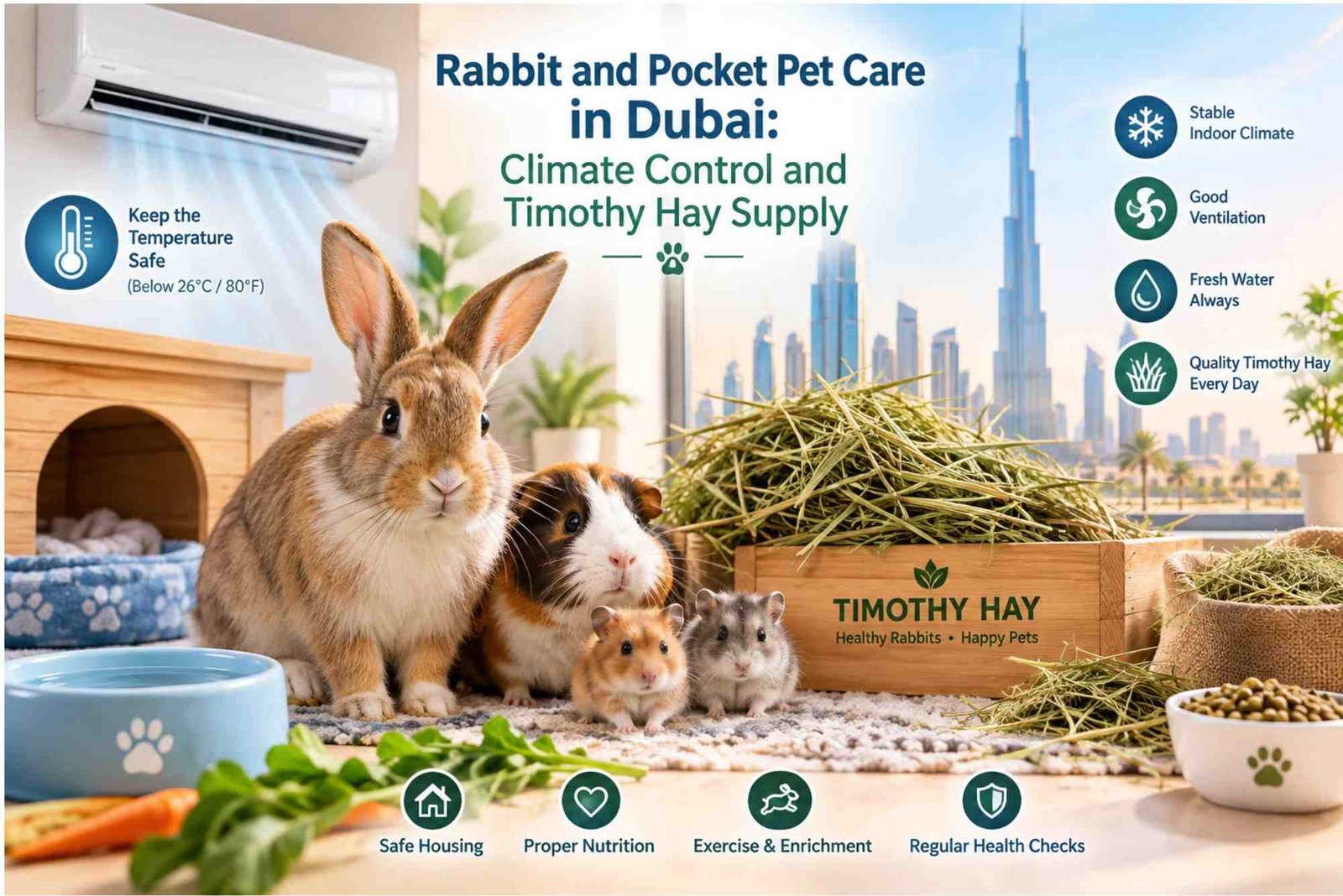
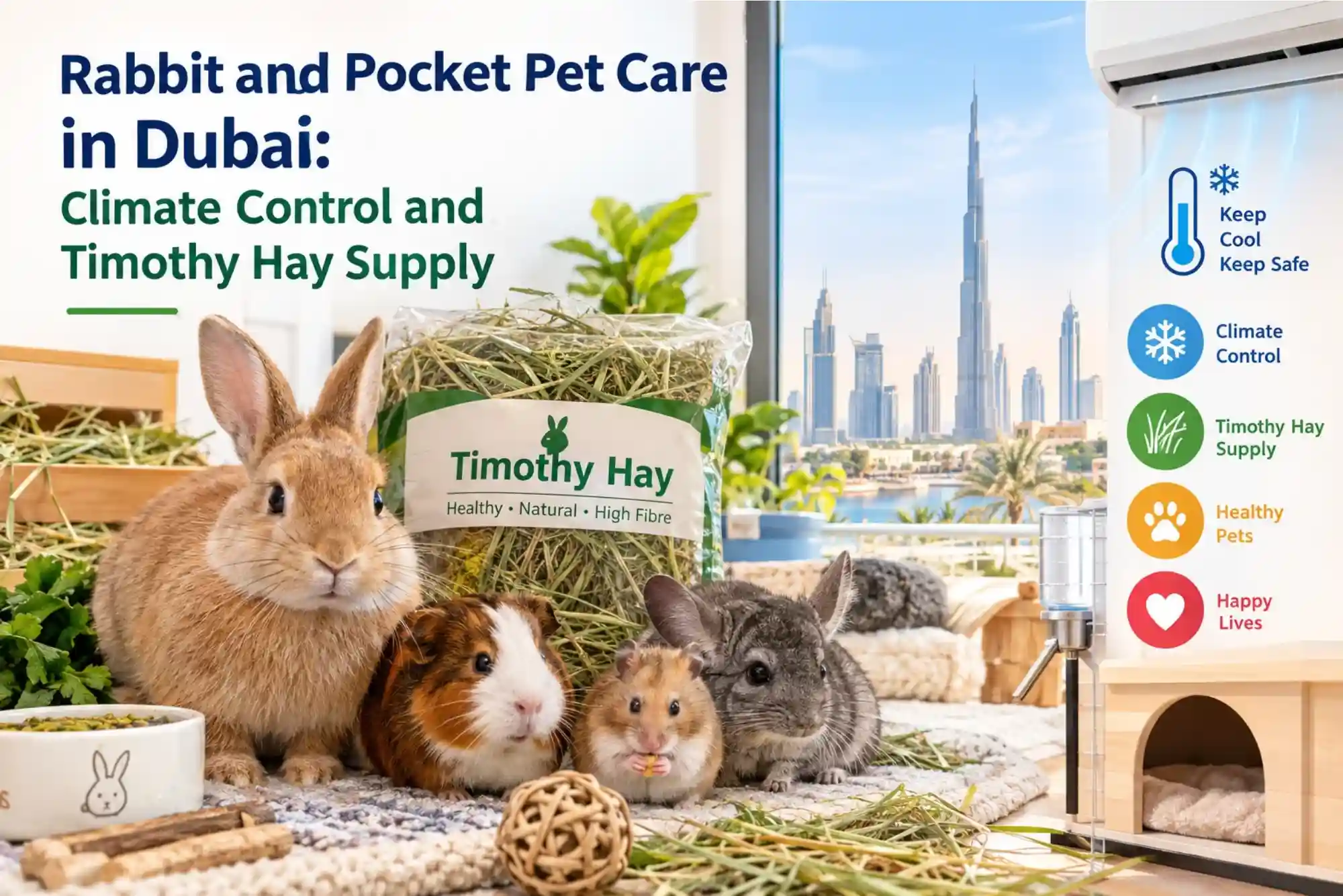
Dubai is known for its hot desert climate, long summers, high temperatures, and periods of considerable humidity. These environmental conditions make pet care different from what many rabbit and small-pet owners may experience in cooler parts of the world. Rabbits, guinea pigs, hamsters, chinchillas, and other pocket pets have specific environmental and nutritional requirements, and temperature management can become especially important during Dubai’s warmer months.
For rabbits in particular, heat deserves serious attention. Rabbits do not sweat like humans, and their ability to lose excess body heat is limited. Veterinary references note that rabbits are sensitive to high temperatures and generally do better in climate-controlled, well-ventilated environments. Prolonged exposure to temperatures above approximately 27°C can make rabbits unwell. (Merck Veterinary Manual)
Alongside temperature control, nutrition is another major part of responsible rabbit care. High-quality grass hay, particularly Timothy hay, provides essential dietary fibre and supports normal digestion and dental wear. Veterinary guidance commonly recommends that grass hay make up the majority of an adult rabbit’s diet and remain available throughout the day. (Veterinary Hospital)
For families living in Dubai, successful rabbit and pocket pet care therefore involves more than choosing an enclosure and buying food. Owners need to create a stable indoor environment, protect pets from excessive heat, maintain fresh water availability, store hay correctly, provide exercise and enrichment, and recognise signs that professional veterinary attention may be needed.
Understanding Dubai’s Climate and Its Effect on Rabbits
Dubai’s climate presents a unique challenge for small animals. Outdoor temperatures can become extremely high during summer, while direct sunlight, hot surfaces, enclosed spaces, and poor ventilation can make the conditions around a pet considerably warmer than the general outdoor temperature.
Rabbits are particularly vulnerable because they have limited ways to release body heat. Unlike humans, they do not have sweat glands that allow effective cooling through perspiration. Their ears play an important role in heat exchange, but this mechanism has limits. Research on rabbit thermoregulation shows that rabbits are poorly equipped to tolerate high ambient temperatures. (PMC)


This means a rabbit enclosure placed on a balcony, terrace, garage, or poorly ventilated room can become dangerous during Dubai’s hottest periods. Even if the area seems comfortable in the morning, conditions can change considerably as the day progresses.
The safest general approach is to keep rabbits indoors in a properly climate-controlled environment. The MSD Veterinary Manual specifically notes that rabbits generally do better indoors in climate-controlled and well-ventilated areas, while hot and humid conditions can cause heat stress. (Merck Veterinary Manual)
For owners who are new to rabbit ownership, this is one of the most important differences between caring for a rabbit in Dubai and caring for one in a cooler climate.
Why Climate Control Matters for Pocket Pets
Climate control is not simply about making a room comfortable for humans. It is about maintaining an environment in which a small animal can safely regulate its body temperature.
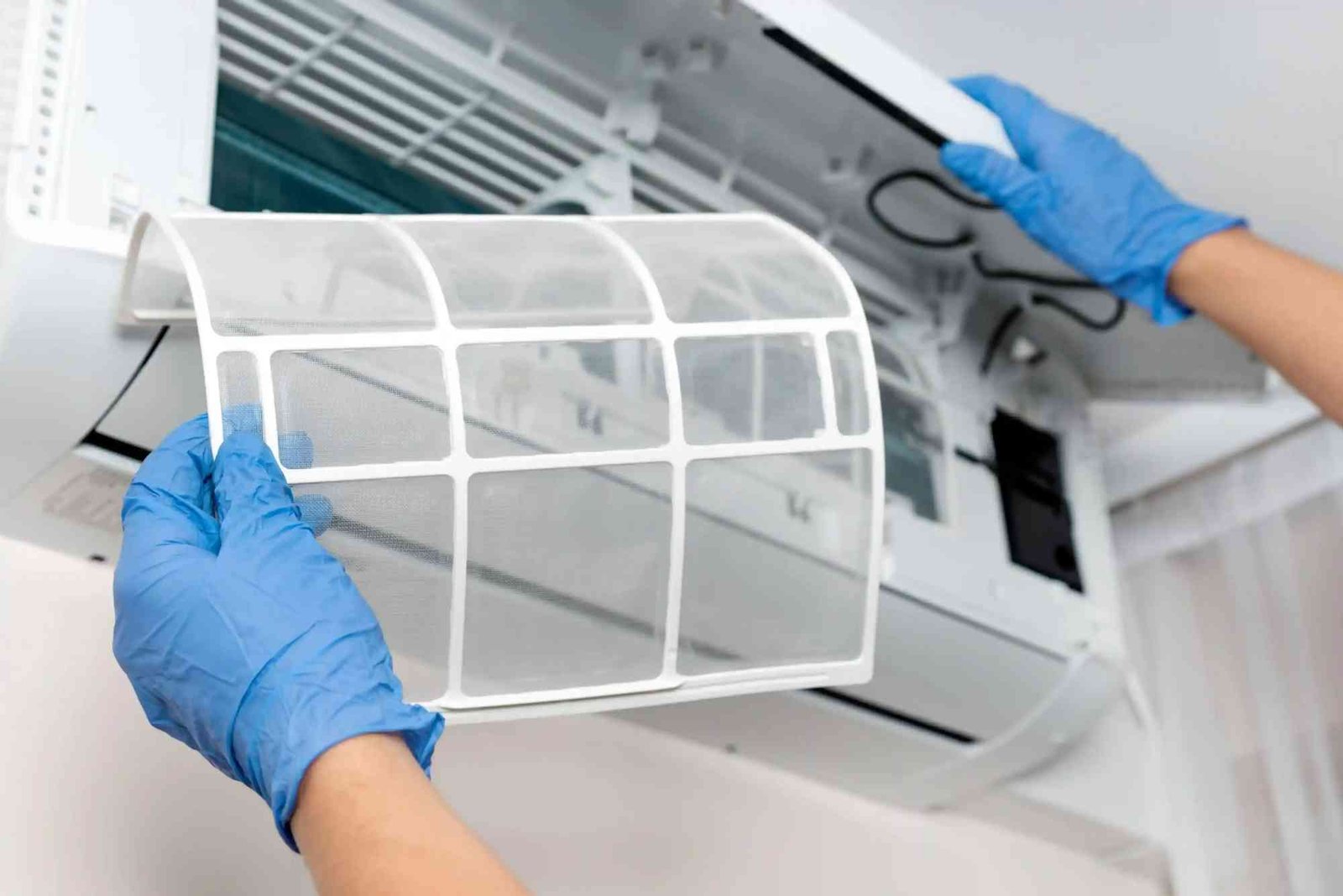
Rabbits should not be exposed to direct sunlight for prolonged periods. A sunny window can also become a problem if the rabbit’s enclosure is positioned directly beside it. Glass can allow sunlight to heat the area, creating a warmer microenvironment even when the room’s air-conditioning is running.
Air circulation is equally important. A cool room with stagnant air is not necessarily an ideal environment. Good ventilation helps maintain air quality and reduces the accumulation of heat and unpleasant odours.
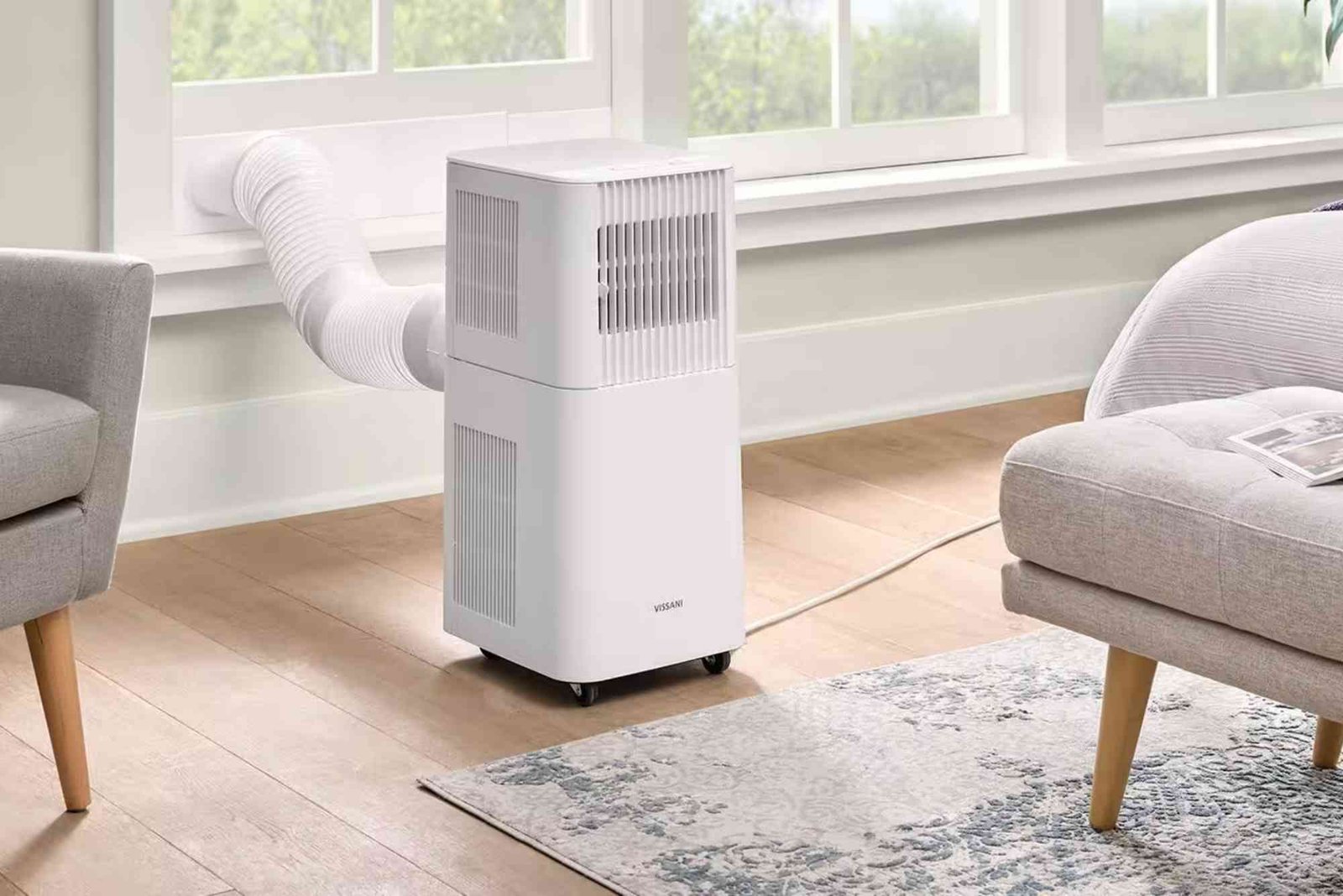
However, strong air conditioning should not be directed continuously at the rabbit. The goal is a stable, comfortable room rather than an extreme temperature difference or a constant cold draft.
Pet owners should also consider what happens when electricity is interrupted. Dubai’s summer temperatures can rise rapidly, so households with rabbits should have a practical plan for maintaining a safe environment if air conditioning temporarily stops working.
A room thermometer can be useful because the temperature shown on a home’s main thermostat may not accurately represent the temperature around the rabbit’s enclosure.
Internal link opportunity: Add your relevant page here, such as [Rabbit Care Guide], linking to your website’s rabbit-care resource.
Creating a Safe Indoor Rabbit Environment
A rabbit’s living area should provide enough space for movement, resting, feeding, and normal behaviour. Rabbits should not be permanently confined to a tiny cage. They need opportunities to move, stretch, explore, and exercise.
Veterinary guidance recommends providing rabbits with adequate housing and daily exercise. A flat-bottomed enclosure is preferable to flooring that can contribute to foot problems, and rabbits should have safe opportunities to spend time outside their enclosure. (Veterinary Hospital)
Rabbit-proofing is particularly important when allowing a rabbit to explore indoors. Rabbits naturally chew, and electrical cables can be especially dangerous. Carpets, furniture, plastic objects, and household plants may also require protection depending on the individual animal.
The environment should contain a comfortable resting area, a litter area, food and water, hay, and safe enrichment. Hide spaces are also valuable because rabbits need somewhere they can retreat when they feel stressed or simply want privacy.
The enclosure should be positioned away from direct sunlight, kitchen heat, balconies, open outdoor doors, and other sources of excessive heat.
A clean environment is equally important. Wet bedding, spoiled food, dirty litter, and accumulated waste can create unpleasant conditions and may contribute to health problems. Daily spot cleaning and regular deeper cleaning are sensible parts of routine rabbit care.
Timothy Hay: A Foundation of Rabbit Nutrition
Food is one of the most important parts of rabbit care, and hay should not be treated as an occasional snack.
Grass hay provides fibre that supports normal gastrointestinal function and also encourages the chewing activity rabbits require because their teeth continuously grow. Veterinary sources recommend that grass hay form the majority of a rabbit’s diet. (Veterinary Hospital)
Timothy hay is one of the most widely used grass hays for adult rabbits. It is naturally fibrous and can be offered freely throughout the day.
For many adult rabbits, Timothy hay can form the foundation of their daily diet alongside appropriate measured pellets, suitable leafy greens, and constant access to fresh water.
The exact nutritional needs of an individual rabbit can vary according to age, health status, weight, activity level, and reproductive status. Young rabbits and nursing rabbits, for example, may have different nutritional requirements from healthy adults.
This is why owners should avoid treating all rabbits as nutritionally identical.
Why Fibre Is So Important
A rabbit’s digestive system is designed around a high-fibre diet. Fibre helps food move through the digestive tract and supports the normal activity of beneficial gut microorganisms.
A diet that is too low in fibre can contribute to digestive problems. At the same time, chewing long strands of hay provides mechanical activity for continuously growing teeth.
This makes hay fundamentally different from treats. A rabbit may enjoy a small piece of fruit, but fruit should not replace hay.
Veterinary guidance from North Carolina State University recommends that hay be available continuously and identifies Timothy and orchard grass as common grass-hay options. (Veterinary Hospital)
For Dubai rabbit owners, maintaining a reliable supply of good-quality hay should therefore be part of normal household pet planning.
How to Choose Good Timothy Hay in Dubai
Not every bag of hay will have the same quality. Owners should look for hay that is clean, dry, appropriately packaged, and free from obvious mould or contamination.
Good-quality Timothy hay generally has a natural grassy smell and should not smell musty or rotten. Excessive dust can also be undesirable, particularly for animals or households where respiratory sensitivity is a concern.
The texture and colour can vary depending on harvest and processing, so owners should not judge quality from colour alone. Instead, examine the overall freshness, smell, cleanliness, packaging, and storage conditions.
Some UAE pet retailers currently offer Timothy hay specifically for rabbits and other small herbivores, including products described as high-fibre and suitable as a staple forage. (petcare.ae)
The most important point is consistency. If a rabbit is eating a particular hay well and tolerating it normally, suddenly changing to a completely different forage may not always be necessary.
Storing Timothy Hay in Dubai’s Heat
Hay storage becomes especially important in a hot climate.
Timothy hay should be kept somewhere cool, dry, and away from direct sunlight. Excessive heat, moisture, or poor ventilation can reduce quality and encourage spoilage.
A bathroom, humid storage area, hot garage, or location directly beside a sunny window may not be suitable.
Some commercially available Timothy hay products recommend storing hay in a cool, dry place away from direct sunlight and resealing the packaging after opening to maintain freshness. (petcare.ae)
Owners purchasing hay in larger quantities should therefore think about storage before buying. A large quantity is only useful if it can be protected from moisture, excessive heat, pests, and contamination.
If hay becomes damp or develops an unusual smell, visible mould, or other signs of spoilage, it should not be fed.
Maintaining a Reliable Timothy Hay Supply
A consistent hay supply is particularly important for rabbit households because hay is not an occasional food. Rabbits should have access to grass hay throughout the day.
Dubai residents may purchase hay from pet shops, specialist small-animal retailers, veterinary-related businesses, or online pet stores. UAE retailers currently list multiple Timothy hay products, with some offering delivery across Dubai and other Emirates. (petcare.ae)
When choosing where to buy, owners should consider more than price. Packaging, storage conditions, product freshness, delivery practices, and the retailer’s ability to maintain a consistent supply are all relevant.
Buying very large quantities may seem economical, but if the household cannot store the hay properly, quality can deteriorate before the rabbit finishes it.
A better approach is to maintain a practical reserve while monitoring how much the rabbit consumes and how well the product remains fresh in the home’s storage conditions.
Internal link opportunity: Add your relevant page here, such as [Timothy Hay for Rabbits], linking to your website’s hay or small-pet nutrition page.
Water Is Essential in Dubai
Fresh water should always be available.
During hot weather, water becomes even more important because rabbits can become dehydrated more quickly when environmental temperatures rise.
Water containers should be checked frequently to ensure they are clean and functioning correctly. If a bottle becomes blocked, the rabbit may suddenly lose access to water.
Some owners prefer bowls, while others use bottles. The appropriate choice depends on the rabbit and the setup, but the key requirement is reliable access to clean water.
Water should also be changed regularly rather than being left unattended for long periods.
Owners should watch their pets’ normal drinking habits. A sudden increase or decrease in drinking may be worth discussing with an exotic-pet veterinarian, especially if it occurs alongside changes in appetite, behaviour, urine production, or droppings.
Recognising Heat Stress in Rabbits
Heat stress is one of the most important health risks for rabbits living in hot climates.
Signs of overheating can include unusual lethargy, rapid breathing, weakness, drooling, reduced responsiveness, or collapse. Rabbits may also change their normal behaviour when they are struggling with heat.
Research indicates that rabbits are particularly vulnerable to high environmental temperatures because their ability to regulate body heat is limited. (PMC)
If a rabbit appears seriously overheated, this should be treated as an emergency rather than something to monitor casually at home. The safest course is to move the rabbit away from direct heat into a cool, well-ventilated environment and contact an emergency or exotic-animal veterinarian promptly.
Cooling should be gentle rather than extreme. Sudden exposure to very cold water can be harmful, so owners should avoid attempting aggressive cooling methods without professional guidance.
Because heatstroke can become life-threatening, prevention is much safer than waiting for symptoms to appear.
Exercise and Enrichment for Indoor Rabbits
Keeping a rabbit indoors does not mean restricting movement.
Rabbits need opportunities to exercise and express natural behaviours. Daily activity can support physical health while also providing mental stimulation.
Safe indoor exercise areas can include rabbit-proofed rooms or pens. Owners should remove accessible electrical cables, toxic plants, small objects that could be swallowed, and other hazards.
Enrichment can include safe chewing items, tunnels, hideaways, cardboard structures, and opportunities to forage. Hay can also be placed in different safe locations to encourage natural searching behaviour.
A rabbit that spends most of its time in a small enclosure without stimulation may become bored or stressed.
Good rabbit care therefore combines climate control with physical activity, environmental enrichment, social interaction, and appropriate nutrition.
Grooming and Hygiene in a Warm Climate
Regular grooming is important for rabbits, particularly during periods of shedding.
Loose fur can accumulate around the living environment and may be ingested during grooming. Rabbits naturally groom themselves, so maintaining a healthy coat and providing an appropriate diet are both important.
Long-haired rabbits may require more frequent grooming than short-haired breeds.
The living environment should also be kept dry and clean. Dubai’s heat does not eliminate the need for hygiene; instead, warm conditions can make food spoilage and unpleasant odours more noticeable.
Litter trays should be cleaned regularly, and wet areas should not be allowed to remain around the rabbit.
Owners should inspect the rabbit regularly for changes in coat condition, appetite, droppings, behaviour, and general activity.
Veterinary Care for Rabbits and Pocket Pets
Rabbits are often mistakenly treated like low-maintenance pets. In reality, they can require specialised veterinary knowledge.
A veterinarian experienced with rabbits and exotic pets can help owners understand nutrition, dental health, parasite prevention, reproductive health, grooming, and emergency care.
Dental problems deserve particular attention because rabbit teeth continue to grow. High-fibre hay and normal chewing activity support dental wear, but dietary management does not eliminate the possibility of dental disease.
Digestive problems can also become serious quickly. Changes in appetite or faecal production should not be ignored.
For Dubai residents, identifying an exotic-pet veterinarian before an emergency occurs is a sensible part of responsible ownership. It allows the household to know where to go if the rabbit develops a serious problem during the night, on a weekend, or during extreme weather.
Pocket Pets Beyond Rabbits
The phrase “pocket pet” can include several small companion animals, and their needs are not identical.
Guinea pigs also require substantial fibre and an appropriate hay-based diet, but their nutritional requirements differ from rabbits. Chinchillas have their own dietary and environmental requirements and are also sensitive to heat. Hamsters have different housing and activity patterns.
This is why owners should avoid applying rabbit-care recommendations to every small animal automatically.
The common principle is that small pets require species-appropriate housing, nutrition, temperature management, enrichment, and veterinary care.
In Dubai, temperature management is a particularly important shared consideration because many small mammals are vulnerable to excessive heat.
Making a Summer Care Plan
A summer care plan can make rabbit ownership safer and easier.
The first step is to identify the coolest suitable indoor room and make sure the rabbit’s enclosure is not exposed to direct sunlight.
Next, monitor the temperature around the pet rather than relying only on outdoor weather reports. Check that the air conditioner is working properly and that ventilation is adequate.
Fresh water should always be available, while hay should be stored in a cool, dry location.
It is also useful to have the contact details of a rabbit-experienced veterinarian readily available.
If the household will be away from home, the person responsible for the rabbit should understand the importance of temperature control. A pet sitter should know how to check water, food, room conditions, and the rabbit’s normal behaviour.
This preparation becomes especially valuable during Dubai’s hottest periods.
Choosing the Right Balance Between Air Conditioning and Ventilation
Air conditioning can be extremely helpful for rabbits in Dubai, but the objective should be stable conditions rather than simply making the room as cold as possible.
The rabbit’s enclosure should not sit directly underneath an air-conditioning outlet. At the same time, the room should not become poorly ventilated.
A stable, comfortable indoor environment is generally preferable to repeated temperature swings.
Owners should also avoid moving rabbits frequently between very hot outdoor conditions and heavily cooled indoor environments. Transport should be carefully planned, particularly during summer.
Vehicles can become dangerously hot when parked, so rabbits should never be left unattended in a vehicle.
Food Safety During Dubai’s Warm Weather
Heat can affect more than the rabbit itself. Food storage also requires attention.
Fresh greens should be washed appropriately, stored correctly, and removed if they become spoiled. Pellets should be kept in a dry, clean container according to the manufacturer’s storage instructions.
Hay should remain dry and well ventilated.
Owners should inspect food regularly instead of assuming that every bag or container remains fresh indefinitely.
A clean feeding area also helps prevent insects and contamination.
Good food hygiene is a simple but important part of maintaining a healthy indoor environment.
Why Responsible Rabbit Care Requires a Long-Term Approach
Owning a rabbit is a long-term commitment. The animal depends on its owner every day for food, water, safe housing, temperature management, exercise, enrichment, and medical care.
Dubai’s climate makes environmental management particularly important, but the basic principles are straightforward.
Provide a climate-controlled indoor environment. Keep the living area clean and well ventilated. Offer unlimited suitable grass hay such as Timothy hay for appropriate rabbits. Provide fresh water continuously. Allow safe exercise and enrichment. Monitor appetite and behaviour. And seek veterinary assistance when something appears abnormal.
These practices can help owners create a safer and more comfortable life for their rabbits.
Internal link opportunity: Add your relevant page here, such as [Small Pet Care in Dubai], linking to another related article or service page on your website.
Conclusion
Rabbit and pocket pet care in Dubai requires special attention to the local climate, especially during the hottest months of the year. Rabbits are sensitive to heat and generally benefit from indoor, climate-controlled, well-ventilated environments. Veterinary sources emphasise that prolonged exposure to high temperatures can cause serious health problems, making prevention an essential part of responsible ownership. (Merck Veterinary Manual)
Nutrition is equally important. Timothy hay and other suitable grass hays provide the fibre rabbits need for healthy digestion and natural chewing. High-quality hay should be available regularly, while storage conditions in Dubai should protect it from excessive heat, moisture, direct sunlight, and contamination. (Veterinary Hospital)
For Dubai rabbit owners, the best care strategy is therefore a combination of climate control, reliable hay supply, fresh water, appropriate housing, exercise, enrichment, hygiene, and access to qualified veterinary care.
With thoughtful preparation, rabbits and other suitable pocket pets can enjoy a comfortable indoor lifestyle even in a challenging desert climate. The key is consistency: maintaining the right environment every day rather than reacting only when temperatures become extreme.
Meta Title: Rabbit and Pocket Pet Care in Dubai | Climate & Timothy Hay Guide
Meta Description: Learn how to care for rabbits and pocket pets in Dubai with proper climate control, heat protection, Timothy hay, hydration, housing, and nutrition tips.
If you give me the 3 exact internal URLs, I can insert them naturally into the article with SEO-friendly anchor text.