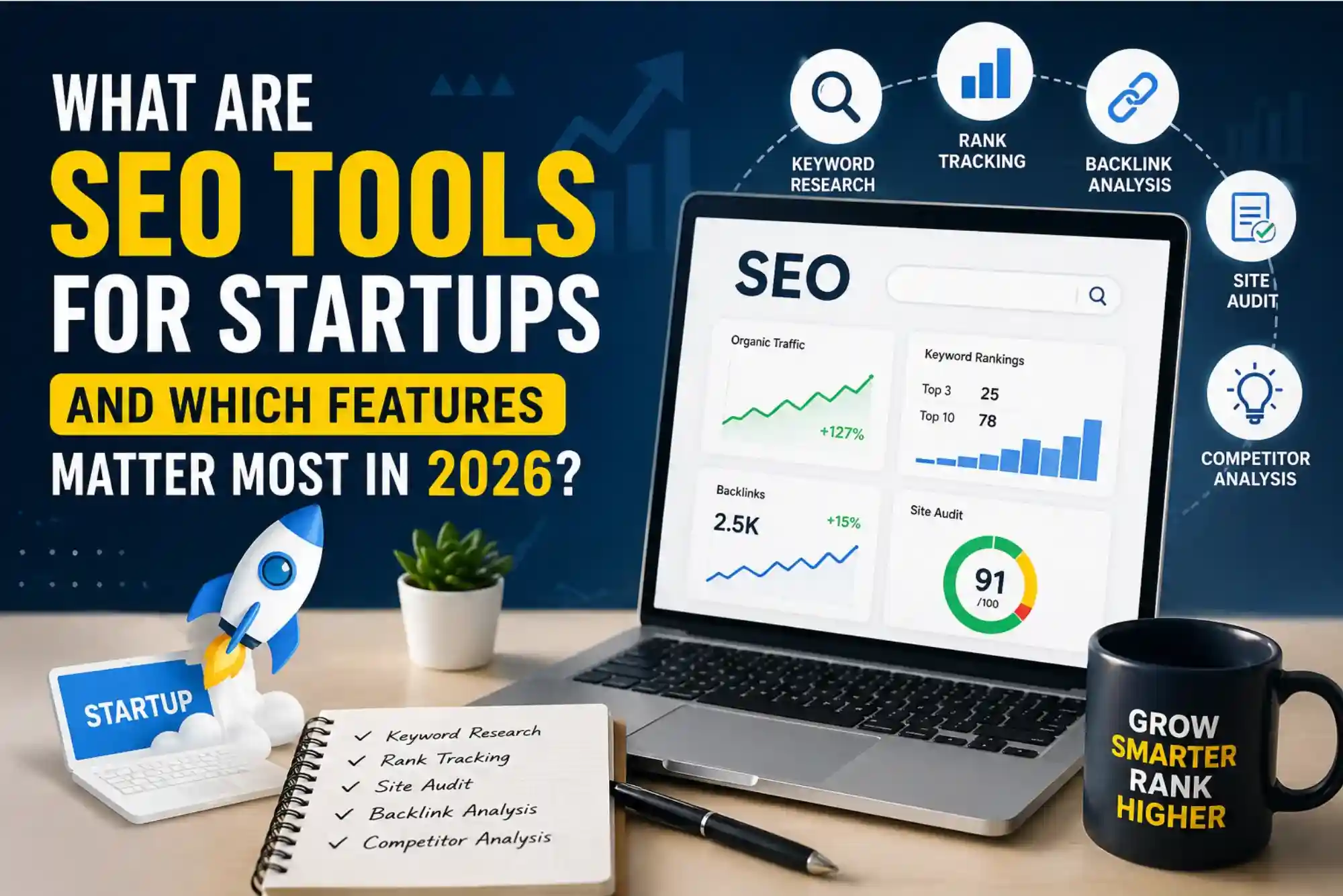
Startups today operate in fast-paced environments where decisions must be data-driven and efficient. SEO tools help bridge the gap between limited resources and the need for strong online visibility. Whether it is understanding search trends, optimizing content, or tracking performance, these tools act as the backbone of modern digital marketing strategies.
However, not all SEO tools are created equal. In 2026, the most effective tools go beyond basic keyword tracking and offer intelligent automation, predictive insights, and deep integrations with marketing systems.
What SEO tools actually do for startups
At their core, SEO tools are designed to help businesses improve their visibility on search engines like Google. For startups, this means gaining traction without relying heavily on paid advertising. Instead of guessing what works, these tools provide structured insights into what users are searching for and how competitors are performing.
Modern SEO platforms help startups with keyword discovery, content optimization, backlink analysis, technical audits, and performance tracking. More advanced systems now incorporate AI to suggest content improvements and even predict ranking changes based on algorithm updates.


For example, startups in service industries can benefit from workflow-based systems that streamline operations and customer engagement. Platforms like appliance repair scheduling systems demonstrate how automation and digital tools improve efficiency—similar principles apply to SEO tools in managing marketing workflows.
Core categories of SEO tools every startup needs
Keyword research and content planning tools
Keyword research remains a foundation of SEO, but in 2026 it is no longer just about search volume. Tools now analyze intent, context, and user behavior patterns. Startups must focus on long-tail keywords and conversational search queries driven by AI assistants and voice search.
Technical SEO and site health tools
Technical SEO ensures that websites are crawlable, fast, and mobile-friendly. Startups often overlook this area, but it is critical for ranking success. Broken links, slow loading times, and poor mobile performance can significantly reduce visibility.
Analytics and performance tracking tools
Modern analytics tools go beyond traffic numbers. They measure engagement, conversion rates, and user journeys. Startups can understand exactly how users interact with their websites and optimize accordingly.
Business intelligence is becoming increasingly important, especially when paired with structured systems like CRM tagging strategies, which help organize customer data and improve marketing accuracy.
AI-powered SEO and automation tools
AI-driven SEO tools are among the most transformative innovations in 2026. They can generate content suggestions, optimize metadata, and even simulate ranking outcomes. Startups benefit from reduced manual effort and faster decision-making processes.
Most important SEO tool features in 2026
AI-driven insights and predictive SEO
The most powerful SEO tools now use artificial intelligence to forecast ranking trends. Instead of reacting to algorithm updates, startups can proactively adjust their strategies. Predictive SEO helps identify which topics will gain traction before they become competitive.
Real-time data and automation
In the past, SEO reports were updated weekly or monthly. In 2026, real-time dashboards are standard. Startups need instant visibility into performance changes so they can act quickly.
Automation also plays a major role. From automated keyword tracking to content optimization suggestions, SEO tools reduce manual workload and allow teams to focus on strategy.
Even operational efficiency tools, such as service contract management systems, show how automation reduces long-term costs and improves consistency—an idea that directly applies to SEO workflows.
Integration with marketing ecosystems
Modern startups rarely rely on a single tool. Instead, they use interconnected systems for CRM, analytics, content management, and automation. SEO tools must integrate seamlessly with these platforms to provide a unified view of performance.
Without integration, startups risk data silos that slow down decision-making and reduce marketing efficiency.
User experience and scalability
A major factor in 2026 is usability. Startups often have small teams, so SEO tools must be easy to use while still offering advanced capabilities. Scalability is equally important because as startups grow, their SEO needs become more complex.
Tools that combine simplicity with depth are becoming the industry standard.
How startups should choose SEO tools wisely
Choosing the right SEO tools is not about selecting the most expensive or feature-heavy platform. Instead, startups should focus on alignment with their goals, budget, and growth stage.
Early-stage startups should prioritize tools that offer keyword research, basic analytics, and content optimization. As they grow, they can expand into AI-driven platforms and enterprise-level solutions.
It is also important to consider ecosystem compatibility. A tool that integrates with marketing automation, CRM, and scheduling systems provides significantly more value than a standalone solution. For instance, streamlined business tools like energy-efficient operational strategies highlight how optimization across systems leads to better overall performance.
Common mistakes startups make with SEO tools
One of the most common mistakes startups make is over-investing in tools without understanding how to use them effectively. Many teams subscribe to multiple platforms but fail to fully utilize their features.
Another mistake is focusing only on rankings instead of overall performance. SEO success should be measured through conversions, engagement, and brand visibility—not just keyword positions.
Startups also often ignore technical SEO issues, assuming content alone will drive traffic. In reality, even the best content cannot perform well if the website has structural problems.
Final thoughts on building a smart SEO stack
In 2026, SEO tools for startups are more intelligent, integrated, and essential than ever before. They are no longer just support systems but strategic assets that directly influence growth and visibility.
The most successful startups will be those that choose tools based on adaptability, automation, and data intelligence. By combining AI-driven insights with strong foundational SEO practices, even small teams can compete with established brands.
Ultimately, the right SEO tool stack is not about quantity but quality. Startups that focus on scalable, integrated, and insight-driven platforms will be best positioned to succeed in an increasingly competitive digital world.
Related Reading: Free vs Paid SEO Tools for Startups: Which Option Makes More Sense in 2026? — full guide
Related Reading: Best AI SEO Tools for Startups in 2026
Related Reading: How Startups Can Use SEO Tools to track rankings more accurately and spot changes early in 2026 — full guide